
Why the Surge in GLP-1 Demand Exposes Invisible Stockouts in Pharmacies
Sales growth in high logistics demand categories reveals that point of sale depletion occurs before traditional reports identify replenishment failures.


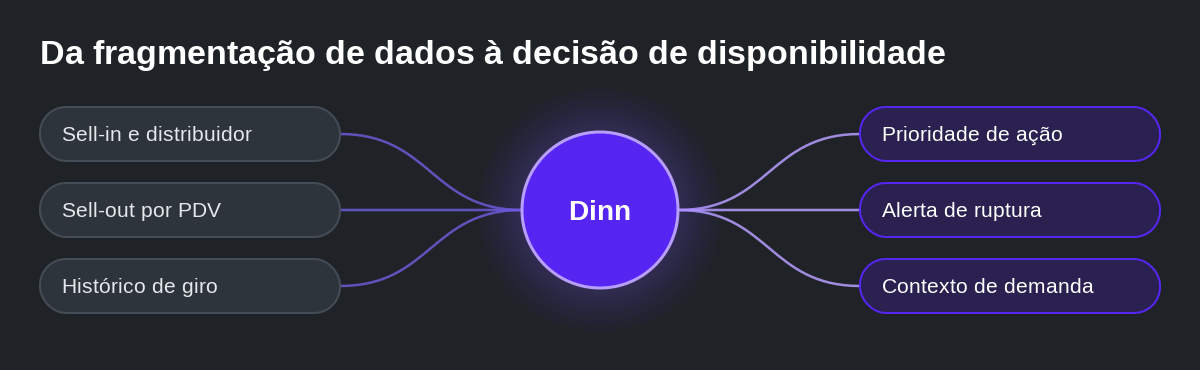
The product has high end-consumer demand, but when the customer arrives at the pharmacy, the display is empty. The recent acceleration in the GLP-1 category places strong pressure on supply and the cold chain, highlighting a critical challenge for trade marketing management and commercial operations. Conventional analysis assumes that the volume manufactured and delivered to distribution channels is sufficient to sustain presence at the point of sale. However, actual retail pharmacy behavior demonstrates that sell-through is highly heterogeneous across different chains, cities, and regions. While national aggregates indicate market expansion, specific points of sale deplete visible inventory days before the standard replenishment cycle can react. The result of this asymmetry is the invisible stockout, a scenario where revenue loss and consumer frustration occur silently, without commercial management having timely visibility to correct the course. The premise that high sell-in solves availability disregards the fact that the real bottleneck lies in the fragmentation of inventory data by point of sale. Reports based on monthly closings or manual spreadsheets deliver diagnostics only when the financial impact is already consolidated. To overcome this limitation, the strategy needs to separate produced volume from inventory effectively available on the shelf, cross-referencing sell-out with turnover behavior by geographic unit. It is essential to examine the operational concerns associated with this monitoring. Availability visibility does not dispense with analytical rigor, demanding clarity on what is directly observed across chains and what is estimated by predictive models in pharmacies without integrated digital signals. Recognizing methodological limits prevents decisions based on false alarms and protects the efficiency of field efforts. The response to this complexity does not lie in producing without criteria or accumulating disconnected dashboards, but in relying on a structured intelligence layer. Capabilities such as Dinn Stock, which is available, allow precise mapping of where absences or stockout risks occur, prioritizing action by SKU, chain, or point of sale. In which chains within your portfolio does the invisible stockout most drain the return of category campaigns?
Turn data into decisions
Dinn shows where pharmacies lack the product, what changed and where to act first, with source and confidence.